
Ask the Right Questions to Find Your Dream Horse

If it’s Broke and Cheap, it’s probably not Sound. If it’s Sound and Cheap, it’s probably not broke, and maybe the most important point, and the hardest to drive home with ANYONE: If it’s Broke, and it’s sound, it is NOT going to be cheap. I work with a lot of riders both buying and selling horses, and honestly, playing matchmaker is one of my favorite activities. The process is made easier by a vast majority of very receptive clients, enthusiastic as I am to find their next perfect match. But there almost always come a time when we have to talk; inevitably we run up against some kind of limitation within those three areas while shopping. I’m sorry to be a wet rag, but EVERYONE thinks they’re the exception to this old rule of thumb. Its kind of worthy of a smile actually. Everyone knows a friend who’s cousin picked up the next Eighty Dollar Champion at Simon’s. And I find the optimism endearing. But in this next Monday Musing, I hope to discuss the reality before us, along with some of the common misconceptions about horse-buying within these parameters, I hope I can create clarity in how to prioritize your needs based on these 3 things, and finally, I hope for some of you, it might just change the way you look at looking for a horse. Let’s assume, for the purposes of this article, that you are already aware of your skill set with horses. Whether you’re brand new to riding and have only had a few lessons, or are a skilled, accomplished rider, let’s figure you’re aware of it. Let’s also assume that you’re aware of basically what it is you’re looking for. You don’t need a Ferrari to go for a Sunday drive, and you wouldn’t buy a ’96 Chevy to enter a NASCAR race. Being honest with yourself about what it is you really need is a whole different discussion. And finally, let’s figure you know how much you can realistically afford to spend right in this moment. Those 3 things are the pillars that buyers need to have in place, no matter where they are in the purchase process. So now, let’s talk about broke, sound, and cheap, and what each of these things mean by themselves. I think a lot is left to interpretation within these, so I want to discuss what, as I trainer, I weigh in considering each trait. Sound. What does it mean? To me, it means a lot more than just “Un-lame”. Soundness lives on a gradient, and the toe-stabbing, head-bobbing, gimping image that often comes to mind is a) pretty extreme on the scale, actually, and b) just one of many ways unsoundness can present. On the other end of the spectrum, I also tend to steer clear of obsessing over finding a perfectly clean set of x-rays, too, as those are no guarantee of a sound horse on the surface; just a correct one at the base. Some questions I ask myself as I evaluate a prospect: Are the horse’s muscles well defined and free of major tension? Is their movement free of major inhibition and even? Are the hooves strong and in correct form? A side note–I don’t get scared by things like “thin soles” or “Needs front shoes”. Many times, this can be rectified with a corrective barefoot trim, but if not, front shoes are pretty minor in terms of maintenance. What about conformation and posture? Is the horse proud and upright, or flat and downhill? Is the breathing even? Does the horse require a special diet? Does the horse require medications to remain healthy and well? That’s not a deal breaker for me, necessarily but it all factors into the definition of sound, and the expectations one can have for the horse’s price tag, good or bad. What about broke? Once again, I think broke lives on a gradient. Green horses are not bad horses, and many green horses are wonderful partners. Conversely, I wouldn’t let a child handle some of my “brokest”, because training and temperament are not mutually exclusive. The questions I ask when considering how “broke” a horse is, are: Would I put my mom on that horse? Would I trust a child to lead it? Does the horse improve the energy of the space around it, or does it degrade it? Does the horse know and do it’s job like a finely oiled machine, or is there some negotiation? Does the horse carry stress, or is it “okay”? If the rider makes a mistake, does it forgive or resent? Additionally, a horse that is broke fits the parameters of what each rider needs individually; my sweet friend Julie needs a kind, gentle, forgiving horse that’s going to enjoy a variety of activities. That same horse does not need to be athletic enough to do 4-tempis or jump a 3 1/2 foot fence. For me, I need a horse that’s got the brain to learn to jump a 4′ fence, do a flying lead change or 6, and gallop 4 miles across varied terrain with random people, things and stimulus along the way. That requires a much different kind of “broke” than Julie’s horse. And finally, what is “Cheap”? A problem, that’s what. Everyone wants to spend as little as possible on a horse, and, frankly, I get it, sometimes. The purchase price is so often the smallest portion of the investment, and so we spend an exorbitant amount of time doing back-bends around budget. So what is cheap? A bargain? Free? Less than you feel like you “should” be paying for what you want? Here’s how I define “cheap”. I figure, save for pulling a horse from a bound-for-slaugher pen (Another ran—I mean, musing, for another time), I figure every sound, adult horse has a base value of approximately $2000. Training, a nice temperament, a flashy color, show experience, etc, all add significant value. If it’s advertised for less than the ballpark $2000, or $4000 with one of the traits listed, that’s a cheap horse. When cheap comes into play, my skepticism for both soundness and brokeness radar doubles. When horses are cheap, they just frankly tend not to be broke, or sound, or sometimes both, and I start asking a lot of “why” based questions. Pick Two. This comes down to your priorities, and this is where you MUST be honest with yourself. The average adult amateur rider over-horses themselves way more often than should happen due to a lack of honesty, and I want to help that not to happen. First and foremost, most pleasure riders really need a broke horse, first. Something that is mild-mannered, capable of providing enjoyment in a variety of circumstances, and able to do the job desired. That’s honestly the most important piece of the puzzle. If you’re doing this for joy, get a horse that already knows the thing. Please. I’m begging you. The next piece comes down to personal availability. I would love nothing more than if everyone had healthy 5 figure budgets and could just buy the sound horse that’s broke. But reality dictates that that’s not always the case. So here’s my advise. You’re going to spend the money, whether it’s now or later. Take a look at your finances, and be honest with yourself: Do I want the up front expense, or do I want the payment plan? If you want the payment plan, allow yourself to look at the broke horses with imperfect vettings. Obviously, eliminate perpetual issues. Fractures, major arthritis, issues that degrade rapidly, or are prohibitively costly. But then be prepared for minor maintenance. Front shoes? Adequan? Joint Supplements? High Fat feed? An extra blanket? These are not big asks in the scheme of things, especially if you have a horse you are otherwise in love with, can do the things you want to do, that brings you to the JOY of horses. If the answer is “I can afford a luxury up front”…then save your money for another 6 months and shop with 1 1/2 as much budget as you planned. It’s not because I want you to spend a ton of money. It’s because I want you to feel free to get exactly what it is that’s GOING to bring you that same joy. And if that horse is $12,000 instead of $9000, believe me, it’s worth it. Now, just for fun, I want to talk about if you happen to be in my shoes: A brave, capable rider, with a facility at your disposal, a good friend in your vet, chiropractor, and farrier, and a slough of highly educated equine professionals available in your wake, but not a lot of disposable income. Then, and ONLY THEN (I am not kidding around, folks, seriously. I’ve been badly hurt cutting this corner before now) do you consider scrimping and cutting corners on the “broke” factor and try to make your own. You will spend $17,000 on the injury the requires an MRI. You will lose 3 months of riding if you get that concussion. You will hurt chronically in 10 years for trying to get that weedy green OTTB to take the contact and getting your shoulder ripped unceremoniously out of place. I learned the hard way to be honest with myself about reality versus my perception of reality. And I while I genuinely enjoy making my own horses, at the end of more days than I think many people realize, it’s not Tempi I’m dreaming of riding, it’s Prin; the reliable, sweet, predictable old mare, with hock arthritis, a short, stiff stride, and an Adequan prescription, but who has more miles, stories to tell, and joy to share than most any other horse I have in my barn. I hope that this is helpful. As always, please, please, PLEASE call me. Ask questions. Share experiences. And don’t be afraid to get particular. Your dream horse is a list away!
Step One—Figure Out What You Really Want
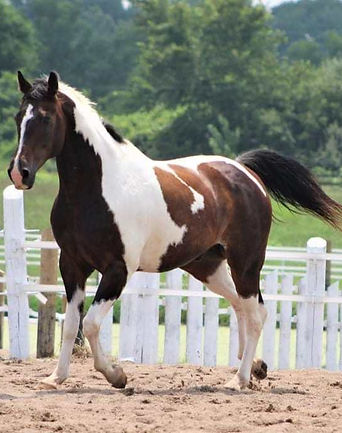
There has never been a better time to buy your dream horse. Many great horses are available, but with the volume of horses on the market, how do you find the right horse? The wrong horse at the right price is still the wrong horse. Follow this four-step guide to ensure that you find your ideal mount.
The basic elements of size, height, color and sex are excellent starting points for your search, but the most important question you can ask is, “What do I really, really want?”
• Do you need a horse with gaits that are very easy to sit?
• Are you looking for a Class A show horse or a trail prospect?
• If you don’t have access to an exercise rider on a daily basis, is a certain level of training a requirement?
• Is building a special relationship with a horse that has a great temperament your goal?
Often people don’t think through their specific requirements and therefore are easily impressed by powerful gaits or a horse’s charisma only to buy the horse and be unable to ride it.
Step Two - Set a Realistic Budget

After you define what you are truly looking for, determine your budget up front before you begin shopping. Be sure to factor in additional costs like pre-purchase exam, sales tax, transportation and new tack if you need it. Ask what the terms are and be sure you have the funds available to make the purchase when you find the right horse.
Don’t forget to factor in your trainer’s commission or fee into your budget. While many sellers are negotiable, be sure to ask about flexibility in the price. This will help you determine realistically which horses to look at. Just because the supply is good right now, don’t expect a good horse to be a give-away. Ultimately, you get what you pay for.
Step Three - Ask the Right Questions


Once you know what you want and how much you can spend, you are ready to begin your search.
-
As you search the Internet for your dream horse, you will have the opportunity to watch video clips and read descriptions about hundreds of horses. From these items you can determine which horses are worth exploring in more detail.
-
Once you have identified some prospects, it is time to speak with someone that really knows the horses. While it may be tempting to send all of your questions via email, an actual conversation can help you save time and increase the likelihood of making a good match.
-
In addition to the basic questions of size, sex, age, etc., here are several questions that can tell you a lot about the horse and whether or not he or she meets your most important needs:
1. How long has the horse been under saddle? How much training has the horse had? Who has done the training?
2. If the horse is young, has the horse ever been off of the farm? How did he/she react?
3. Has the horse shown and if so how did he/she perform?
4. Describe the horse’s temperament. Would he/she be good for an amateur or is he/she more suited to a professional at this time?
5. What medical issues has the horse had? Has the horse ever been unsound?
6. Is the horse on any supplements, regular medication or receiving special shoeing? 7. Are there x-rays available on this horse? 8. What is the exact price? Is there any flexibility?
-
Be sure to ask questions about your specific needs. Is the horse easy to sit? What type of potential does the horse have? Does he need to be lunged everyday before he is ridden?
-
The person selling the horse should also ask you questions. This indicates that they are trying to make a good match for their horse. “We always try to ask the questions that help match horses to potential buyers,” stresses Lesa of RBS.
Among the questions that RBS asks potential buyers:
1. What age/sex/breed/height are you looking for?
2. What discipline do you want to do with the horse? What level do you want to achieve?
3. How much riding experience do you have? How much experience do you have working with young horses?
4. Are you a professional trainer yourself? If not, are you planning on seeking the help and guidance of a professional trainer with your new horse?
5. Will your trainer be assisting you with the purchase of the horse?
6. Are you planning to try the horse in person or will you be buying from videos/photos?
7. In what price range are you looking?
“It is extremely important to us that we match our horses with the right owners,”
Lesa states. “Our reputation depends on happy buyers.”
Step Four - Going Deeper
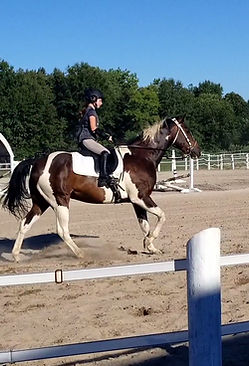
Once you have identified true prospects via the Internet and over the phone, it’s time to watch a DVD. This will generally be longer than the clips that are posted on websites, plus the quality is usually better. If the horse is showing, also ask to see a ride of one whole test.
-
If you will be visiting prospects, make a checklist of what you’d you like to see and who you want to go with you. Are you taking a friend and/or your trainer? If the horse has a certain level of training, be sure to watch demonstrations of the movements. For example, if the horse is at Third Level, watch lead changes, half-pass and collected and extended gaits. If the horse is jumping, try him over fences. Don’t forget to observe the horse being handled in and out of his stall, loading onto a trailer, or performing other tasks that rate highly on your list of desirables.
-
Once you are satisfied that a horse meets your dream horse checklist, you can schedule a pre-purchase exam, a topic so important that it requires its own future article.
-
Whether you are searching for a schoolmaster, an international prospect or a broodmare as the foundation for your breeding program, identifying what you want and asking the right questions is the key to finding your perfect horse.
RBS CONSULTING

With over 30 years’ experience help find the best match for you
Whether you are looking for a family friend or show horse, or something in between
-
Commission:
-
Purchasing: 5% of sales price per horse trial
-
Sales: 10%,of sales price per horse trial (advertising as charged)
-